

Convection ovens and proofers
Convection ovens and proofers help bakeries, canteens and food service kitchens handle baking, reheating and finishing with more control. From Cape Town, Coastal Metal supplies practical stainless equipment suited to daily trade use and local site conditions.
What convection ovens and proofers are used for
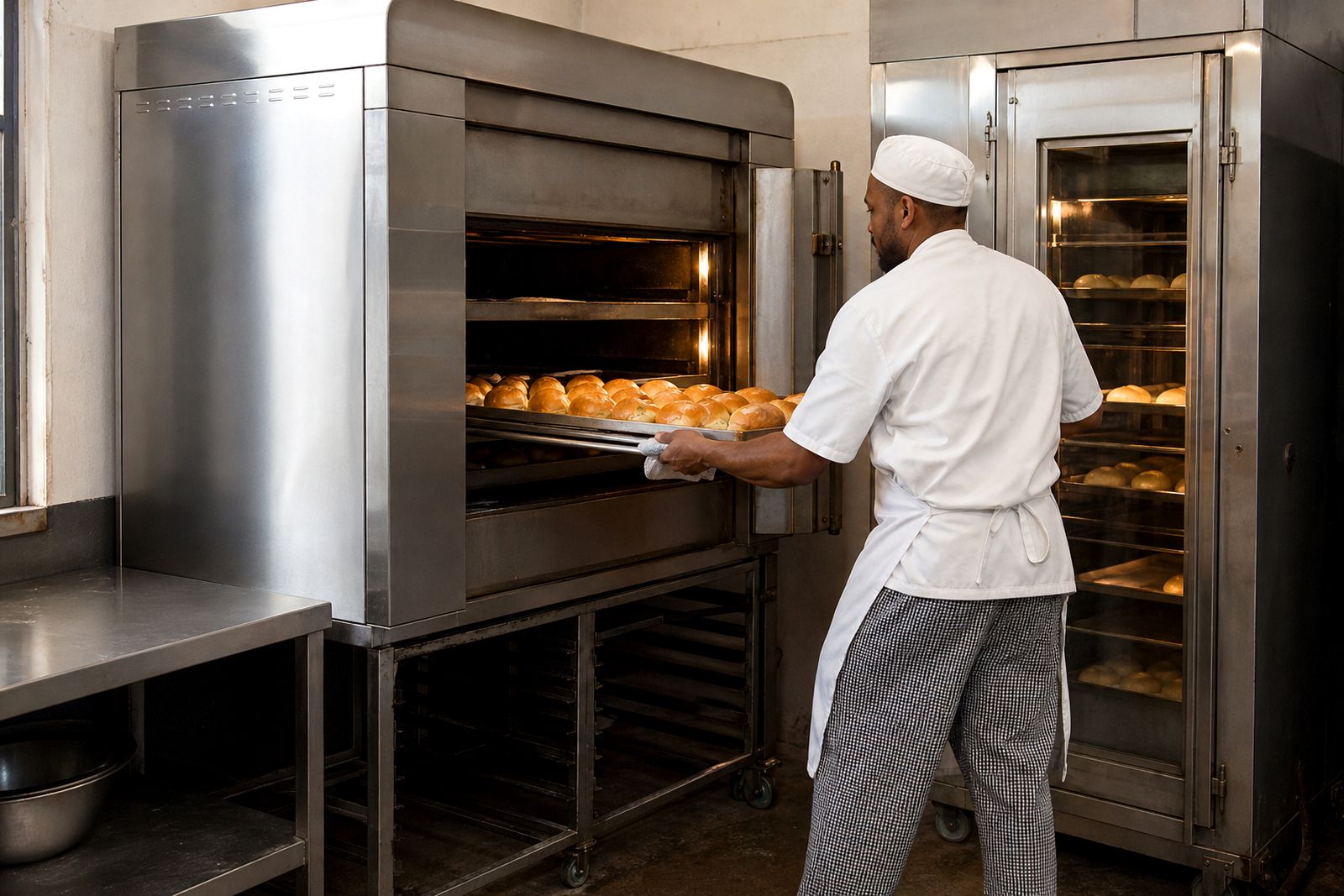
A convection oven uses forced hot air to give more even baking and finishing than a still oven. In trade kitchens this suits rolls, pastries, pies, muffins, tray bakes, roasted items and reheating for service, especially where output must stay consistent across batches.
A proofer creates a warm controlled cabinet environment for dough before baking. For bakeries, school canteens, hotel breakfast sections and takeaway prep rooms, a separate proofer helps improve rise and timing so the oven is not used for holding dough, which can lead to uneven results.
These units are commonly chosen where a kitchen needs better tray turnover without moving to a full rack bakery setup. They are useful for baking and finishing but they are not a replacement for every specialised cooking method.
Sizes, formats and practical limits
We can help with countertop and floor standing options, as well as matching proofers or oven and proofer combinations where the layout allows it. Choice usually depends on tray format, service volume, available floor space and the type of product being baked.
- Compact units for smaller canteens, cafés and front prep rooms where space is tight.
- Medium footprint ovens for regular tray baking, snack production and service finishing.
- Larger floor standing setups for bakery sections and central production kitchens.
- Proofers sized to match the oven workflow so dough staging is easier during busy periods.
Working limits matter. Convection ovens are good for consistent browning and reheating, but they are not ideal for every artisan loaf style, heavy steam baking requirement or very delicate product that may dry out under strong airflow. A proofer helps dough rise, but it is not a holding cabinet for cooked food and it should not be treated like general warm storage. If your menu includes pizzas, high moisture bakery lines or specialist pastry work we will point you to the right category rather than forcing one machine to do everything.
Where they suit best, and where they do not
Convection ovens and proofers suit bakeries, hotel prep kitchens, hospital and school canteens, staff dining rooms, takeaways and production areas that need reliable tray based baking. They also work well where menu items move between prep, proving, baking and pass-out on a set schedule.
- Good fit for rolls, croissants, pies, muffins, quiches, baked desserts and hot holding handover after finishing.
- Useful in canteens that need morning bake-off and lunch service support from the same unit.
- Suitable in coastal conditions when the equipment body and surrounding fabrication are stainless and kept clean and dry between shifts.
They are less suitable where your main need is char grilling, wok cooking, deck style pizza baking or heavy steam injection. They can also be the wrong choice if your site has poor ventilation, weak extraction planning, narrow access routes or unstable utility supply and no proper backup plan. In very tight kitchens, door swing and tray loading clearances are often missed at planning stage, and that causes problems later.
Site requirements and installation checks
Before ordering, check the room size, doorway widths, final operating position and staff movement around the oven and proofer. Kitchens in Cape Town and the Western Cape often deal with salt air, damp winter conditions and hard daily washdown, so the surrounding benches, wall finishes and floor drainage should be planned properly.
Installation must be done by a qualified installer, and the relevant municipal and compliance requirements apply for electrical, gas, ventilation and plumbing connections where needed. We do not provide site wiring, gas line or drain instructions, but we can help you confirm the unit type and service points before delivery.
- Measure access from offload point to final kitchen position.
- Confirm power supply, phase requirement and isolator position where applicable.
- Allow working clearance for doors, tray loading and daily cleaning.
- Check extraction, ambient heat and airflow around the equipment.
- Plan nearby stainless benches or racking for trays in and trays out.
Cleaning and day to day care
Good results depend on regular cleaning and sensible use. Crumbs, grease and baked-on sugar affect heat circulation and can shorten component life, while neglected proofers often build up residue around door seals and tray supports. Coastal kitchens need a bit more attention because salty air can sit on surfaces if the room is left damp overnight.
Wipe stainless panels with a non-abrasive cleaner, dry them after cleaning and keep chlorinated chemicals away from the metal where possible. Interior racks, runners and trays should be cleaned on a routine schedule and not only when performance drops. Gaskets, hinges and latches should be checked too, because a door that does not close properly wastes heat and slows service.
If your team bakes sugary items or glazes products during service, clean more often not less. Small habits make a difference here.
What to tell us when you enquire
To recommend the right convection oven and proofer setup, we need a clear picture of your menu, production flow and site constraints. That lets us guide you toward a practical unit rather than one that looks large enough on paper but does not fit the job.
- What you are baking or finishing each day.
- Whether the unit is for bakery production, canteen service or mixed use.
- Your preferred tray size and how many trays you need in rotation.
- Available floor space, access widths and whether the unit must pass through a narrow doorway or passage.
- Utility details on site and whether extraction or drainage is already in place.
- Whether you need matching stainless tables, sinks, shelving or trolley support nearby.
If you are planning a new kitchen or changing an existing line, include a rough layout sketch and photos of the room. Use the enquiry form on our contact page and we will come back with suitable options. Ask for a quote.
What our Catering Equipment customers say
Verified Google reviews
Questions we get asked
Can one convection oven handle both baking and reheating?
Often yes, especially in canteens and mixed service kitchens. The right choice depends on what you bake, how often you reheat, and whether delicate products need a different oven style.
Do I need a separate proofer?
If you work with dough regularly, a separate proofer usually gives better timing and more consistent rise. For occasional bake-off only, an oven alone may be enough.
Can you supply the oven with surrounding stainless items?
Yes. We also supply and fabricate related stainless equipment such as benches, shelving and trolley support so the baking area works properly as a line.
Also worth a look
Ask for a quote
Send a note through our contact form with the equipment you are looking at, the kind of kitchen it is for and your delivery town, and our sales team will reply with a quote.
Open the contact form