

Mixers and mincers
Coastal Metal supplies planetary mixers and meat mincers for restaurants, hotels, canteens, takeaways and food service kitchens from Cape Town. We help you choose equipment that suits your menu, prep volume and available services, with freight arranged across South Africa.
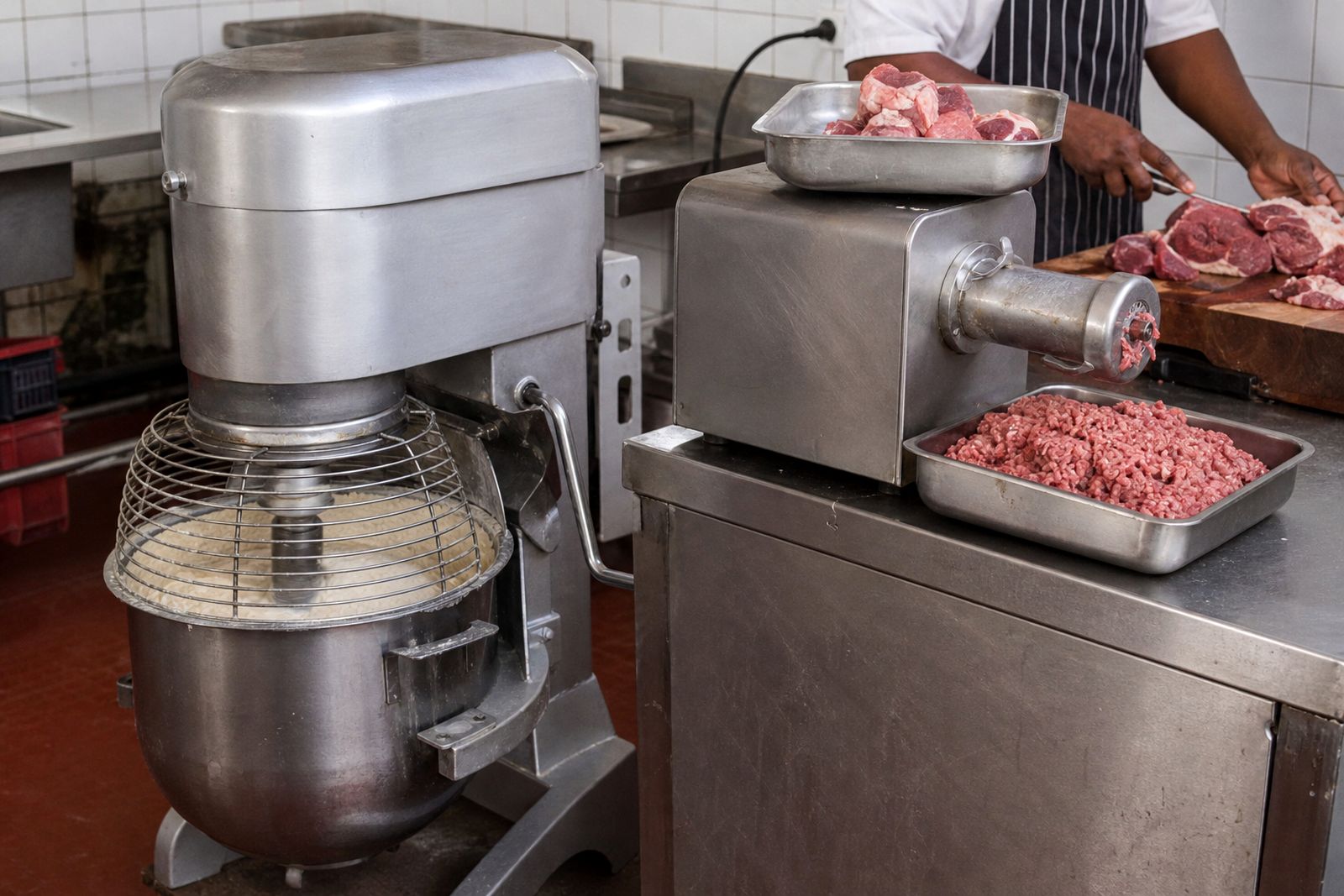
Planetary mixers and mincers for daily prep
Planetary mixers are used for bakery and general kitchen prep where one machine must handle more than one task. In a commercial kitchen that usually means mixing batters, whipping cream, beating eggs, blending fillings and working lighter doughs. Meat mincers are used where you need consistent mince for burgers, meatballs, boerewors filling, sauces or portion prep in-house rather than relying on pre-minced product.
These machines suit independent restaurants, hotel kitchens, canteens, takeaways, deli counters and central prep rooms. They are practical where output must be steady and repeatable, and where the operator needs simple controls and easy cleaning between batches. For many kitchens in Cape Town, especially near the coast, stainless steel construction matters because humidity and salt in the air can be hard on equipment if finishes are poor.
Sizes, options and sensible working limits
The right choice depends less on the machine label and more on what you are actually making each day. A small bench mixer may be fine for sauces, batters and whipped products, while a heavier floor-standing unit is better for repeated dough work and larger prep runs. In the same way, a compact mincer suits a takeaway or small butcher-style section, while a heavier unit suits kitchens doing regular mince production through service.
- Mixers: bench or floor-standing formats, with standard attachments for whisking, beating and mixing.
- Mincers: counter-top or larger free-standing styles, with different plate and knife setups for finer or coarser mince.
- Duty level: light prep, medium daily use or heavier production use.
- Feed style: operator-fed mincers for controlled portions and cleaner batch changes.
Working limits matter. A planetary mixer is not the best choice for very dense doughs all day long, and a light-duty unit should not be forced through stiff mixes just to save on floor space. A meat mincer should also not be treated like a bone processor or a frozen block breaker. If product is too hard, too sinewy or poorly trimmed, performance drops and wear increases quite quickly. It sounds obvious but many breakdowns start there.
Where each machine suits, and where it does not
Planetary mixers are a good fit where you need versatility. One unit can cover cake batters, mashed fillings, whipped toppings, mayo-style mixes and lighter dough applications. They are useful in bakeries attached to coffee shops, school or staff canteens, and hotel pastry sections where recipes change through the day. They are less suitable where the main job is heavy bread dough for long shifts, because that usually calls for a machine built specifically for that type of load.
Meat mincers suit kitchens that want control over fat ratio, freshness and portion quality. They work well in burger outlets, grill houses, hotel banqueting prep and takeaway kitchens making fillings in-house. They are less suitable where product arrives already processed to your standard, or where there is no proper raw-meat workflow and cleaning routine. In cramped kitchens, raw and cooked zones must still be kept apart, otherwise the convenience of mincing on site can create hygiene problems.
Site needs before you order
Before supply, it helps to check where the machine will stand and who will use it. Commercial mixers and mincers need a level surface, safe working clearance and enough room for loading, unloading and cleaning. Heavier units may need a dedicated floor position rather than a crowded prep bench. If your kitchen sees regular power cuts, think about restart checks and whether chilled product can be kept within your food safety plan during interruptions.
- Confirm the available power supply at the machine position.
- Allow space to remove bowls, guards, trays, plates and cutting parts for washing.
- Keep raw-meat mincing away from cooked food and final plating areas.
- Check drainage and wash-up flow so dirty parts do not cross into clean prep zones.
- For any electrical work, a qualified installer and the relevant municipal and compliance requirements apply.
If your kitchen is in an older Cape Town building, measure door widths, passage turns and stair access first. We can also help if the machine must fit into a planned stainless steel prep line with adjacent tables, sinks or shelving.
Cleaning and routine care
Daily care is what keeps these machines useful in a busy kitchen. Mixers should be wiped down after each session, with removable parts washed, dried and refitted properly. Mincers need more frequent strip-down cleaning because raw meat residue dries quickly and can affect hygiene and cutting quality. Coastal conditions can also leave marks if equipment is left wet overnight, so drying matters just as much as washing.
Operators should avoid forcing product through a mincer, overfilling mixer bowls or running attachments that are not seated correctly. Knives and plates on mincers need to be kept in good order, and worn parts should be replaced before the machine starts tearing rather than cutting. For mixers, unusual noise, slipping, heat build-up or inconsistent mixing are signs to stop and check the unit. A quick clean done properly is better than a rushed one that misses the hard-to-reach parts.
What to tell us in your enquiry
To recommend the right mixer or mincer, we need a clear picture of your menu, output and site conditions. The enquiry form on our contact page is the best place to send that information. The more detail you give us, the easier it is to suggest a practical option rather than something too light or too bulky for the job.
- What products you will make, such as batters, whipped items, pastry mixes, burger mince or sausage filling.
- How often the machine will run each day and whether use is light, medium or production level.
- Whether you need a bench unit or a floor-standing unit.
- The available power supply and the space where the unit must fit.
- Any hygiene, cleaning or workflow concerns, especially for raw-meat prep areas.
- Whether you also need matching stainless steel tables, sinks, shelving or custom fabrication.
We supply from Cape Town across the Western Cape and can arrange freight to the rest of South Africa. If you need pricing, lead time or a matched equipment proposal, ask for a quote through the contact form and we will reply with the suitable options.
What our Catering Equipment customers say
Verified Google reviews
Questions we get asked
Can one planetary mixer handle dough as well as batters and cream?
Yes, but only within the machine's intended duty. A versatile planetary mixer can handle several prep tasks, though very dense dough production may call for a more specialised solution.
Can a meat mincer process frozen meat or bones?
No. Commercial mincers should be used with correctly prepared product. Frozen blocks, bones and poorly trimmed pieces can damage cutting parts and reduce performance.
How do I choose between a bench unit and a floor-standing unit?
Look at your daily volume, the products you make, available floor space and how long the machine will run in one stretch. Send those details through the contact form and we will guide you.
Also worth a look
Ask for a quote
Send a note through our contact form with the equipment you are looking at, the kind of kitchen it is for and your delivery town, and our sales team will reply with a quote.
Open the contact form