

Tables and shelving
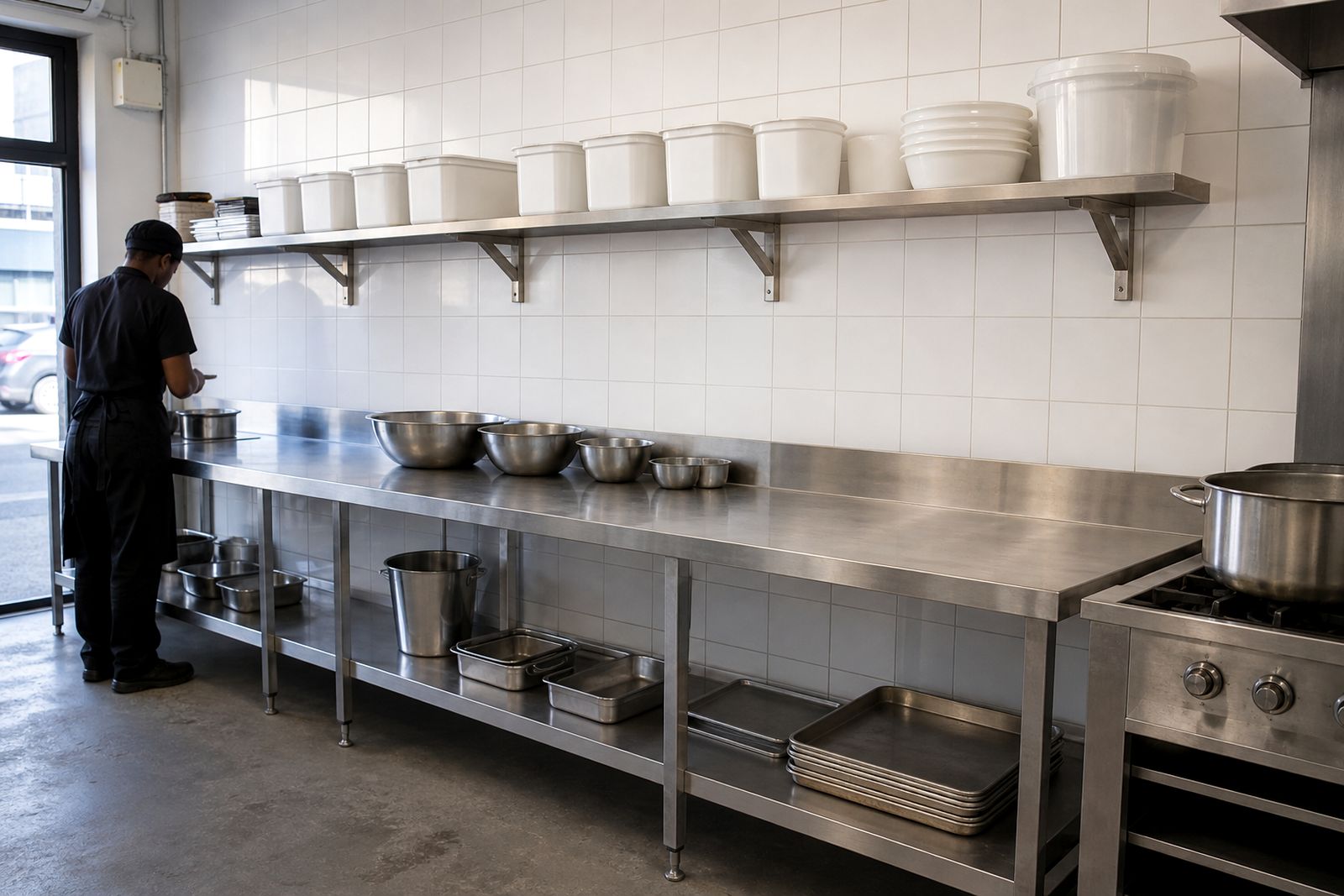
We supply stainless steel benches, wall shelves and racking for working kitchens, service areas and wash-up spaces. Units are chosen around workflow, available floor area and the kind of daily use they must handle.
What these units are used for
Tables and shelving in a commercial kitchen do more than fill open space. They create clean work surfaces for prep, support small appliances, keep dry goods and utensils off the floor, and help staff move through service without bottlenecks. In busy restaurants, hotels, canteens and takeaways around Cape Town, the right bench and shelf layout can make a noticeable difference to cleaning time and daily flow.
We supply practical stainless steel units for food prep, plating, pass areas, wash-up zones, back counters and general storage. For many sites the best result is a mix of open work benches, undershelves, wall shelves and freestanding racking. In coastal conditions, stainless steel remains a sensible choice because it is easier to wipe down and stands up well when the kitchen sees steam, grease and humid air every day.
- Open benches for prep and general working surfaces
- Benches with undershelves for extra storage below
- Wall shelves for ingredients, containers and small equipment
- Freestanding racking for dry stores and utility areas
- Units suited to kitchen, scullery and service spaces
Sizes, layouts and practical options
Most sites need a combination of standard sizes and made-to-fit pieces. Bench length, depth and height are chosen according to the room, the staff path and the type of task done at that station. Narrower benches may suit passages and front service areas, while deeper worktops are more useful for prep rooms and bakery sections. Wall shelves are usually set above working height with enough clearance for mixers, containers or ingredient bins below.
Common options include flat tops, splashbacks against tiled walls, adjustable feet for uneven floors, undershelves, top shelves and bracing where extra stiffness is needed. Freestanding racking is often used in dry stores, receiving areas and utility rooms where stock must stay organised and off the ground. If your floor slopes, or your walls are not perfectly square, tell us early, it helps avoid fitting issues on site.
- Benches in standard or custom lengths
- Different depths for passages, prep rooms and service counters
- Splashbacks where water or food splashes are expected
- Undershelves for trays, bins and wrapped stock
- Wall shelves in single or multiple tiers
- Freestanding racking for stores and back-of-house use
Working limits and where they suit best
Not every stainless steel table or shelf is intended for the same duty. Some units are ideal for light prep, plating and holding containers during service. Others are built for heavier kitchen use with stronger framing, extra bracing and thicker tops. When we discuss working limits, the main questions are what will sit on the unit, whether the load stays in one spot or is spread out, and how often staff will move or knock into it through the day.
These products suit food prep areas, bakery sections, sculleries, pass counters, dish landing points and dry stores. They are also useful in coffee stations and bar back areas where cleanable surfaces matter. They do not suit every environment though. Very wet exterior spaces, corrosive chemical areas, and rooms where impact from trolleys or crates is constant may need a different build detail. Wall shelves also depend on the strength of the mounting surface, not just the shelf itself.
If you plan to place heavy countertop equipment, dense stock or stacked containers on a bench or shelf, tell us that when you enquire so the build can match the task instead of being under-specified.
Site needs and installation considerations
Before a bench or shelf is made or supplied, it helps to confirm how the room actually works. Door widths, corners, wall finishes, floor falls, drains and existing services can all affect the final size. In older Cape Town buildings we often find walls that are out of line or floors that are not level, so a simple measured opening is not always enough on its own.
For wall shelves and larger racking, the mounting surface and fixing method matter. Masonry, blockwork and lightweight partition walls behave differently and may need different support. Where units are placed near gas cooking, wash areas or electrical points, the qualified installer and the municipal and compliance requirements apply. We do not give gas, plumbing or electrical installation instructions.
- Check access from receiving point to final room
- Measure around columns, kerbs, skirtings and wall tiles
- Confirm whether walls can carry shelf loads safely
- Allow enough space for cleaning around and under units
- Plan for staff movement, tray handling and trolley paths
Care and day to day upkeep
Stainless steel is practical but it still needs routine care. Wipe surfaces with mild detergent and clean water, then dry them rather than leaving them wet after service. In coastal humidity, regular drying helps reduce marks and keeps the finish looking better for longer. Avoid harsh chlorides, abrasive pads and strong acid cleaners, especially around welds and corners.
Units last better when they are used within their intended duty. Do not overload shelves with compact heavy stock if they were meant for lighter items, and do not use bench edges as lever points for crates or machines. A quick weekly check of fixings, feet and brackets is worthwhile in busy kitchens where vibration and constant cleaning can loosen things over time. It is simple maintenance but it saves trouble later.
What to send with your enquiry
The more detail you send through the contact page, the easier it is to suggest the right bench, shelf or racking setup. A rough sketch is fine if you do not have plans. If you already know the room use, wall type and what must be stored or prepared there, include that from the start. Ask for a quote once the requirements are clear.
- Overall room size or opening size in millimetres
- Required bench length, depth and working height
- Whether you need a splashback, undershelf or extra tiers
- Wall type for any mounted shelving
- Type of items to be stored or equipment to be supported
- Whether the area is prep, wash-up, service or dry storage
- Any access limits such as stairs, narrow doors or tight turns
- Your town in the Western Cape or freight destination elsewhere in South Africa
We supply from Cape Town across the Western Cape, with freight arranged to other parts of South Africa where needed.
What our Catering Equipment customers say
Verified Google reviews
Questions we get asked
Can you make benches and shelves to fit an awkward room?
Yes. Custom sizing is often the best route for narrow passages, uneven walls, columns or corners that do not suit standard units. Send your measurements and a rough sketch through the contact page.
Are wall shelves suitable for heavy items?
That depends on the shelf build, the load pattern and the wall it will be fixed to. Tell us what must be stored and what the wall is made of so the right option can be considered.
Do you supply outside Cape Town?
Yes. We supply across Cape Town and the Western Cape, with freight to the rest of South Africa. Include your delivery town when you enquire.
Also worth a look
Ask for a quote
Send a note through our contact form with the equipment you are looking at, the kind of kitchen it is for and your delivery town, and our sales team will reply with a quote.
Open the contact form