

Fridges and drinks dispensers
Coastal Metal supplies upright, undercounter and display cooling for restaurants, hotels, canteens, takeaways and food service kitchens. We help you match the right fridge or drinks dispenser to your menu, service style and site conditions in Cape Town and across South Africa.
What these units are used for
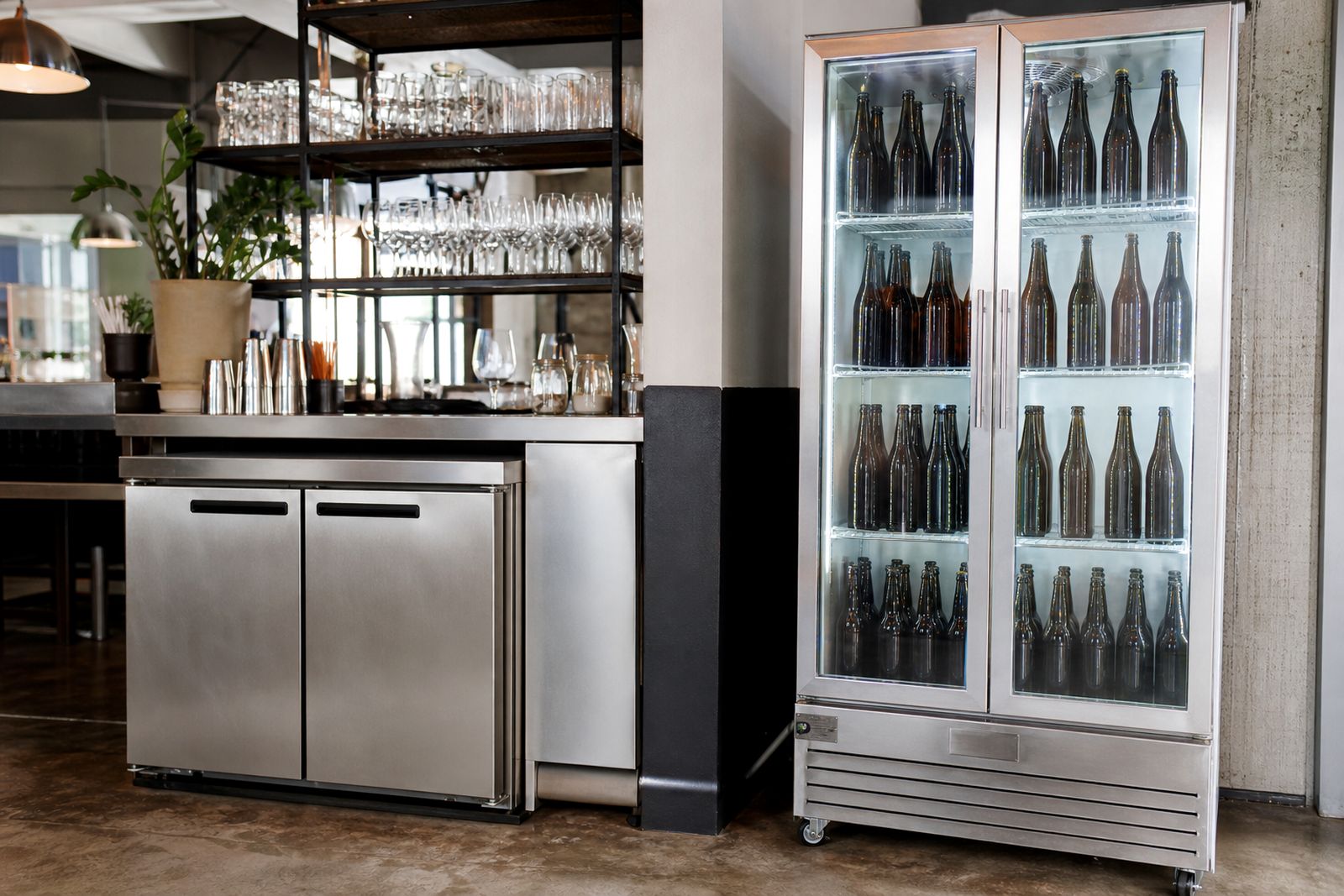
Fridges and drinks dispensers cover the everyday cooling jobs found in commercial kitchens, serving counters and front shop areas. Upright fridges are commonly used for general chilled storage, undercounter units fit below worktops where space is tight, and display coolers keep bottled drinks, desserts or prepared items visible during service. In a busy kitchen they need to hold temperature steadily while doors are opened often, so the right unit depends on workflow as much as floor space.
For trade use, stainless steel cabinet units are usually chosen for prep and back of house work because they are easier to wipe down and cope better with hard use. Glass door display units and drinks dispensers are more suited to customer facing areas where visibility matters. If your site is near the coast, salt in the air and damp conditions can affect finishes and some components over time, so it helps to choose equipment suited to the environment and to clean it regularly.
Main types and size options
We supply several fridge and dispenser formats to suit different kitchens and service points. The best choice comes down to access, available width and depth, door swing, and how quickly staff need to load and remove stock during a shift. Some operators need compact cooling under a counter, others need full height chilled storage, and some need a visible merchandiser for cans, bottles or ready to serve items.
- Upright fridges: Full height storage for ingredients, drinks or plated items in back of house and service areas.
- Undercounter fridges: Lower profile units for tight kitchens, bars, coffee points and prep lines.
- Display fridges: Glass door cabinets for customer facing display and quick product selection.
- Drinks dispensers: Chilled beverage service units for self service points, breakfast areas and canteens.
Size choice should also allow for ventilation clearances, cleaning access and door opening room. A unit that physically fits into a gap may still be wrong if staff cannot open it fully, or if hot cooking equipment sits too close. We will usually ask about overall dimensions and your service volume before recommending an option, just so the unit is not cramped in on arrival.
Working limits and where they suit best
Commercial cooling works best when the room itself is reasonably controlled. Very hot kitchens, direct afternoon sun, blocked ventilation grilles and constant door opening all make a fridge work harder. Display units especially can struggle if they are placed next to fryers, pizza ovens or grill lines. Drinks dispensers also need the right setting, because they perform better in sheltered indoor positions than in open doorways or wind exposed service counters.
These products are well suited to restaurants, hotel sculleries, canteens, takeaways, cafés and staff refreshment areas. They are less suited to outdoor use, uneven floors, or spaces where ambient heat is extreme for long periods. If your kitchen faces regular power cuts, it is worth planning stock holding and door opening carefully, as no fridge likes repeated warm up cycles and overloading after a restart.
- Good fit: Enclosed kitchens, bars, servery lines, hotel breakfast rooms and indoor retail counters.
- Use with caution: Hot pass areas, spaces beside cooking equipment, and narrow passages with poor airflow.
- Not ideal: Outdoor patios, washdown zones with direct spray, and exposed loading areas.
Site requirements before delivery
Before ordering, check the route from offloading point to final position. Doorways, passages, stairs, ramps and lift sizes often matter as much as the unit itself. Floors should be level and strong enough for the operating weight, and there should be room to open doors fully for loading, cleaning and maintenance. On undercounter units, think about adjacent cabinetry and whether a door will foul a bin, leg or wall return.
Electrical supply, drainage where applicable, and any water connection for certain dispenser types must be assessed on site by a qualified installer. Municipal and compliance requirements apply where relevant, particularly in commercial kitchens and public serving areas. Ventilation gaps should not be blocked, and cooling equipment should not be boxed in too tightly. If the unit sits in a hot production kitchen, tell us that up front because it may affect the style we suggest.
Care and day to day upkeep
Regular cleaning keeps cooling equipment working properly and helps with hygiene. Wipe stainless steel surfaces with a mild cleaner, rinse, and dry to avoid streaking and tea staining, especially in coastal humidity. Glass doors and display shelves should be cleaned often because fingerprints and spills build up fast in customer areas. Staff should avoid using harsh abrasives, chlorine heavy chemicals or rough scourers on visible finishes.
Simple housekeeping makes a real difference. Keep door seals clean, do not overload shelves, and make sure air paths inside the cabinet stay open. Condenser areas should be checked and cleaned at intervals recommended for the site, because flour, grease and lint clog them quicker than many operators expect. A bit of routine attention saves headaches later, even if the kitchen is flat out.
- Clean spills promptly and dry surfaces after washing.
- Check door seals for wear and proper closure.
- Leave airflow space around the unit.
- Do not place hot food straight into chilled storage unless the application is meant for it.
- Arrange periodic service checks in harder working kitchens.
What to include with your enquiry
The more detail you send through the contact form, the easier it is for us to suggest a suitable fridge or drinks dispenser. A short note saying you need a cooler is often not enough, because service style, available space and ambient conditions all affect the answer. If you have a rough kitchen layout or counter sketch, include that as well. It does not need to be fancy just clear.
- The type of business, such as restaurant, takeaway, hotel, canteen or coffee point.
- Whether the unit is for back of house storage, undercounter use, or customer display.
- The available width, depth and height in millimetres.
- Whether the area runs hot, gets afternoon sun, or sits close to cooking equipment.
- The products being stored or dispensed, and how often doors will be opened during service.
- Your town for delivery or freight planning.
If your job includes counters, sinks, shelving or custom stainless steel work alongside the cooling equipment, mention that in the same enquiry so we can look at the full setup together. Ask for a quote through our contact page and we will come back with suitable options.
What our Catering Equipment customers say
Verified Google reviews
Questions we get asked
Can I use a display fridge next to a fryer or grill line?
It is usually better to keep display cooling away from heavy heat sources. High ambient heat and greasy air make the unit work harder and can affect temperature holding and cleaning.
Are undercounter fridges suitable for tight bar and coffee areas?
Yes, provided there is enough ventilation space, the floor is level, and doors can open properly without hitting walls or adjacent fittings.
What should I send when asking for a quote?
Please use the contact form and include your business type, the available dimensions, whether the unit is for storage or display, your town, and any notes about heat, airflow or access.
Ask for a quote
Send a note through our contact form with the equipment you are looking at, the kind of kitchen it is for and your delivery town, and our sales team will reply with a quote.
Open the contact form