

Ice machines
Coastal Metal supplies ice machines for bars, restaurants, hotels, takeaways and fish counters from Cape Town. We help you match the machine to your service volume, ambient conditions and available utilities so ice production stays steady through a busy shift.
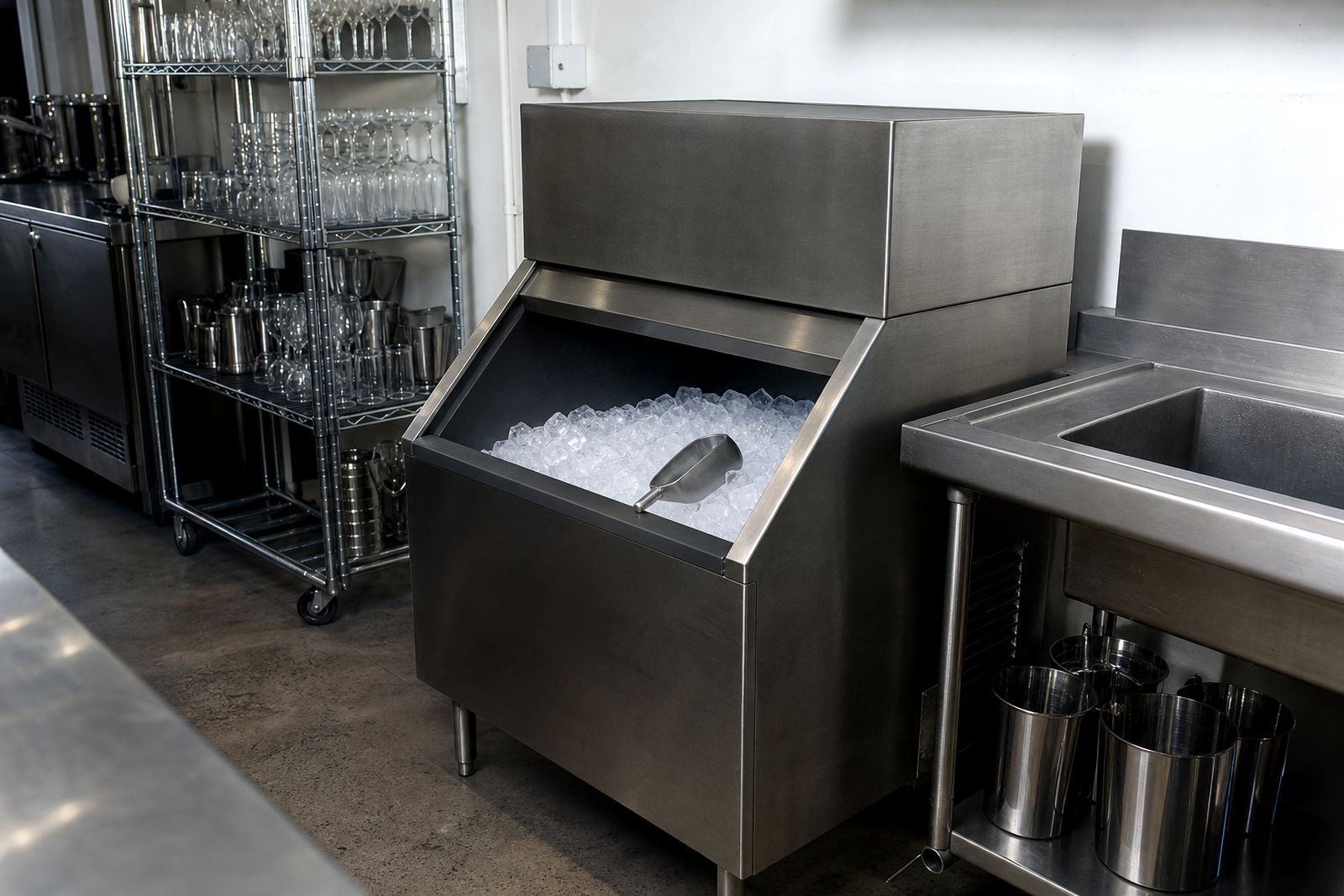
What an ice machine is used for
An ice machine makes and stores food-safe ice for service and back-of-house use. In hospitality it is commonly used for soft drinks, cocktails, blended beverages, display bins, seafood counters and fast refill points where bagged retail ice is not practical. For many kitchens and bars the real value is having a steady supply on site instead of sending staff out when demand picks up.
Different operations use ice in different ways. A bar may need clean cube ice that looks good in the glass and melts at a controlled rate. A fish counter may need flake or granular ice that spreads easily over product and keeps surfaces cold. A takeaway with a drinks station often needs simple, repeatable output rather than large storage. We can help you choose around the way you work, not just the footprint of the unit.
Ice types, sizes and working limits
Commercial units are usually selected by daily production and bin storage, but actual output depends heavily on room temperature, incoming water temperature and how often the bin is opened. In Cape Town summers and warm kitchen pass areas can reduce production compared with a cool scullery or dedicated drinks room. If the machine sits next to fryers, ovens or direct afternoon sun, expect slower recovery.
- Cube ice machines: suited to bars, restaurants, hotels and front counter drinks service where appearance matters and melt rate should be moderate.
- Flake or granular ice machines: suited to fish counters, buffet display, produce cooling and applications where the ice must spread and cover product evenly.
- Undercounter units: useful where floor area is tight and demand is moderate, such as small bars or coffee service points.
- Modular head and separate bin units: better for higher-volume service where storage needs to keep up with lunch and dinner peaks.
Working limits matter. Most machines perform best in a clean, ventilated area with stable water supply and room temperatures within the maker's stated range. Very hot rooms, coastal scale build-up, poor airflow and low water pressure can all affect ice shape and output. If your site sees regular power cuts you should tell us, because restart cycles and warm bins can change how much usable ice is available when service resumes.
Where ice machines suit, and where they do not
These machines suit hospitality sites that need dependable in-house ice every day. Typical installations include restaurant bars, hotel service areas, canteens, events prep rooms, seafood counters, deli displays and back bars where staff need quick access. They also suit kitchens that use ice for chilled prep, short-term holding and specific menu items.
- Good fit for: busy bars, seafood handling, buffet service, drinks stations, venues with regular daily demand.
- Less suitable for: very low-use sites where a full machine may sit idle for long periods, spaces with poor drainage, and cramped hot corners with no airflow.
- Not ideal for: domestic use, outdoor exposed positions, or any area where cleaning access is blocked.
If your operation only needs occasional ice, buying bagged ice may still be simpler. Likewise, if your water quality is poor and maintenance is likely to be neglected, a machine can become more trouble than it is worth. We would rather size it honestly from the start than place a unit that struggles on site.
Site requirements before installation
Ice machines need the basics done properly: water, drainage, power supply and enough ventilation around the cabinet. Installation must be handled by a qualified installer, and the applicable municipal and compliance requirements apply. The exact utility needs vary by machine type, so the best approach is to confirm the site details with us before ordering.
For Cape Town and the coast, a few local conditions matter. Salt in the air can be hard on neglected equipment, and water quality can leave scale inside components if filtration is ignored. A machine installed near a beach-facing opening or in a steamy wash-up area may need more frequent cleaning and checks than the same unit in a dry interior room.
- Level floor or stable support surface.
- Cold water feed with suitable pressure and isolation point.
- Drain point with proper fall and no backflow risk.
- Dedicated power point as required by the unit specification.
- Clear airflow space around louvres and service panels.
- Enough front or side access for cleaning and routine servicing.
Cleaning, water quality and day-to-day care
Ice is a food product, so the machine and bin need regular cleaning, not just a wipe on the outside. Good habits keep ice clear, reduce odours and help the machine recover properly during a busy shift. In many sites the biggest avoidable problems come from scaled-up internals, blocked filters and bins left open too often.
Daily care is simple. Keep the scoop clean and stored properly, empty old ice if the machine has stood unused, and make sure staff close the bin fully after service. On a planned schedule the machine should be cleaned and sanitised according to the product instructions, with water filtration checked and replaced when needed. In hard-water areas or sites handling seafood, that schedule may need to be tighter, especially in warm weather when demand is heavy and staff are opening the bin all day.
If output drops, cubes turn small, or the machine sounds as if it is cycling more than usual, book a check early. Small issues often start with airflow, water feed or scale, and they can get worse quickly if ignored.
What to tell us when you enquire
The quickest way to narrow the right machine is to tell us how the site actually uses ice. A short note through the enquiry form on our contact page is enough to start, and we can come back with suitable options and a quote. If you are fitting out a new kitchen, bar or fish display area, mention what other equipment will sit nearby because heat and access can affect the recommendation.
- Type of business and service style, such as cocktail bar, restaurant, hotel breakfast area or fish counter.
- Preferred ice type, if known: cube, flake or granular.
- Approximate daily demand and peak periods.
- Whether you need undercounter storage or a separate bin.
- Available space in millimetres, including height and ventilation clearance.
- Site town in the Western Cape or elsewhere in South Africa for freight planning.
- Power supply, water point and drain position near the intended location.
- Indoor ambient conditions, especially if the area gets hot or humid.
If you are unsure on any of these points, send what you have and we will guide you from there. Ask for a quote.
What our Catering Equipment customers say
Verified Google reviews
Questions we get asked
Which ice type is best for a bar?
Cube ice is usually the first choice for bars because it presents well in the glass and suits mixed drinks and soft drinks. If you serve a specific style of beverage or need fast chilling for display, tell us and we can point you in the right direction.
Can an ice machine be fitted outside?
In most cases it is better placed indoors in a clean, ventilated area. Weather exposure, coastal air, heat and poor drainage can shorten service life and reduce output.
Why does output change from one site to another?
Ice production is affected by room temperature, water temperature, water quality, airflow and how often the storage bin is opened. Two similar machines can perform quite differently if one sits in a hot bar corner and the other in a cooler service room.
Ask for a quote
Send a note through our contact form with the equipment you are looking at, the kind of kitchen it is for and your delivery town, and our sales team will reply with a quote.
Open the contact form